Light Pharma APQR
AI-Powered Annual Product Quality Review
Automate your APQR lifecycle end-to-end — from scheduling and data integration to AI-generated summaries and audit-ready reports.
APQRs Are Required — and Resource-Intensive
Every pharmaceutical manufacturer must complete Annual Product Quality Reviews. In practice, APQRs consume weeks of effort — pulling data from LIMS, SAP, TrackWise, EDMS, MBR/BMR; chasing approvers; reconciling formats; manually drafting summaries.
Data Scattered
Information lives in LIMS, SAP, TrackWise, EDMS, Lonza Moda, and MBR/BMR. Manual compilation eats QA/QC bandwidth for weeks per product.
Inconsistent Formats
Different templates across sites, countries, and review periods make consolidation painful and audit responses unpredictable.
Approval Delays
Email-based reviews and disconnected sign-offs slow cycle times and create accountability gaps across cross-functional teams.
Manual Statistics
Cpk, control charts, ANOVA — typically performed in Excel, often inconsistently, with limited proactive trend detection.
Audit Trail Gaps
Manual edits and shared spreadsheets fail FDA, EMA, MHRA, and CDSCO inspection scrutiny on data integrity grounds.
Resource Drain
Senior QA experts spend more time formatting reports than analyzing what the data actually tells them about product quality.
Light Pharma APQR — Complete Digitization of the APQR Lifecycle
A compliance-ready automation platform that unifies data from your systems, enforces structured workflows, applies statistical analysis automatically, and uses generative AI to draft summaries — transforming APQRs from a resource-intensive task into an efficient, repeatable process.
Reduce Manual Effort
Automatic data import from LIMS, SAP, TrackWise, EDMS, MBR/BMR. AI-drafted summaries cut weeks of manual compilation.
Accelerate Completion
Smart scheduling, country-specific calendars, automated notifications, and parallel review workflows compress cycle times.
Strengthen Compliance
21 CFR Part 11, EU Annex 11, CGMP-ready. Embedded e-signatures, time-stamped audit trails, exportable change histories.
Surface Insights
Cpk/Ppk, SPC charts with Nelson rules, ANOVA before/after change, stability shelf-life prediction — built in.
10 Capabilities — Everything You Need for Modern APQR
Structured Workflow & Collaboration
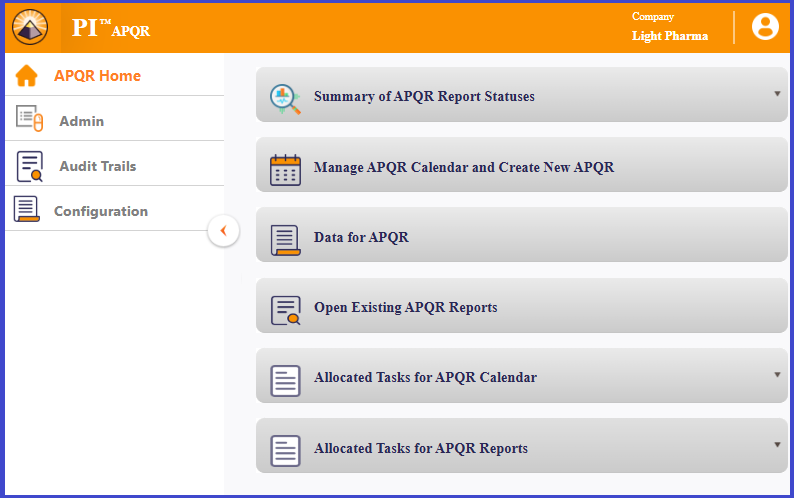
Seamless progression from development through review and approval. Built-in e-signature support at every stage, comment capture for transparency, and full status visibility across cross-functional teams.
Smart Scheduling & Tracking
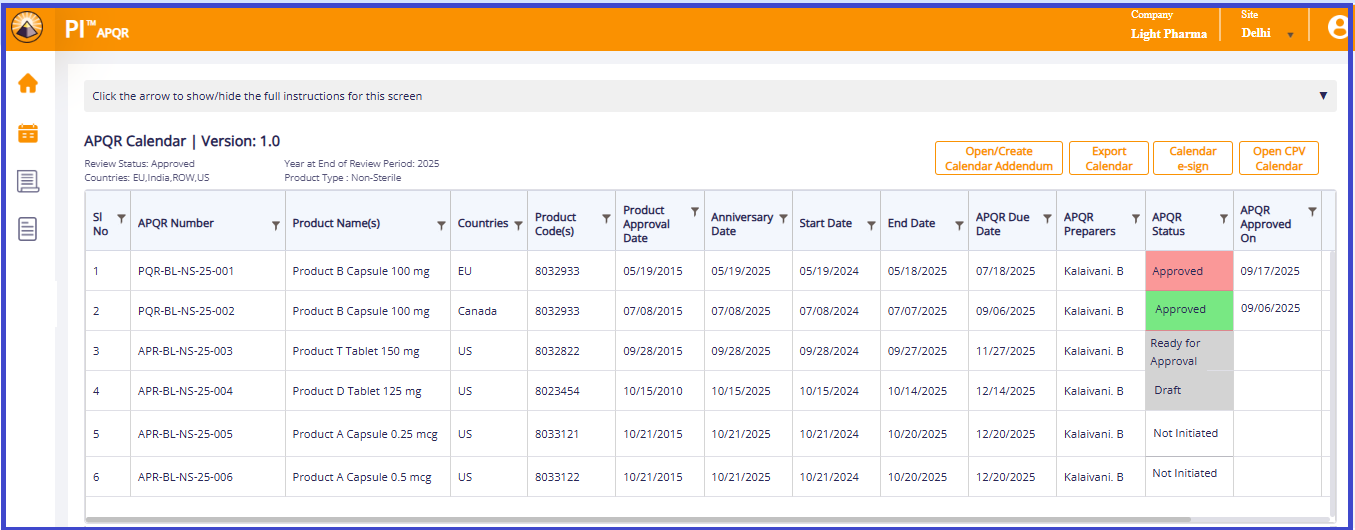
Dedicated APQR Calendar with country-specific support, auto-generation of APQR numbers, addendum creation, and management dashboards. Notifications keep stakeholders on deadline; export to Word or PDF.
Centralized Data Repository
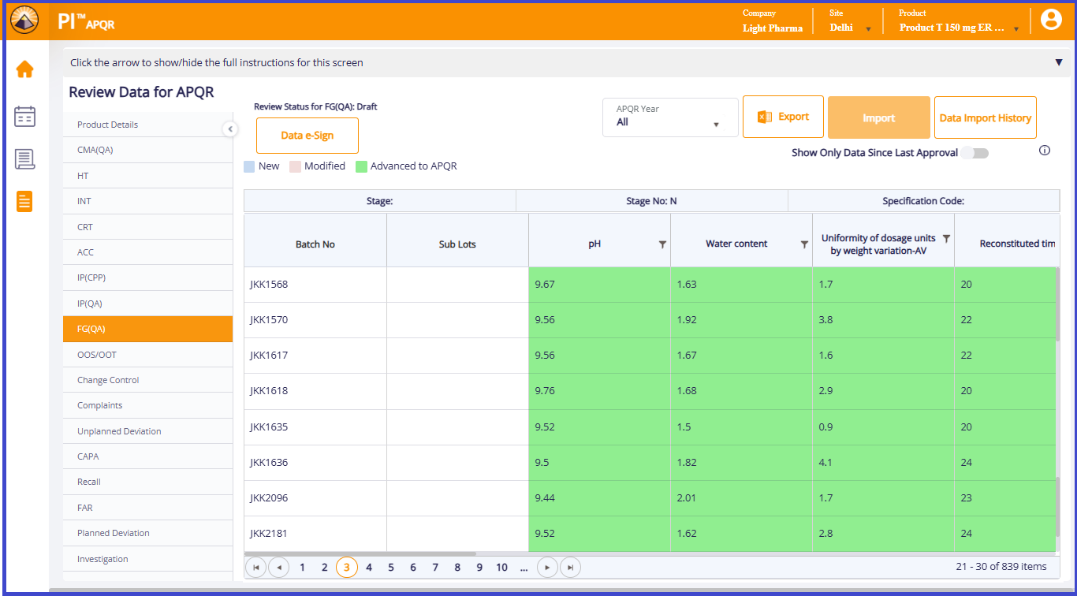
Direct integration with LIMS, SAP, TrackWise, EDMS, Lonza Moda, and MBR/BMR. Unified database for batches, materials, analytical methods, investigations, recalls, and complaints.
Streamlined APQR Generation
Predefined templates that auto-populate batch, QMS, and test data. Standardized Excel imports or manual entry, configurable validation rules, side-by-side comparison of previous and current year APQRs.
Advanced Analytics & Insights
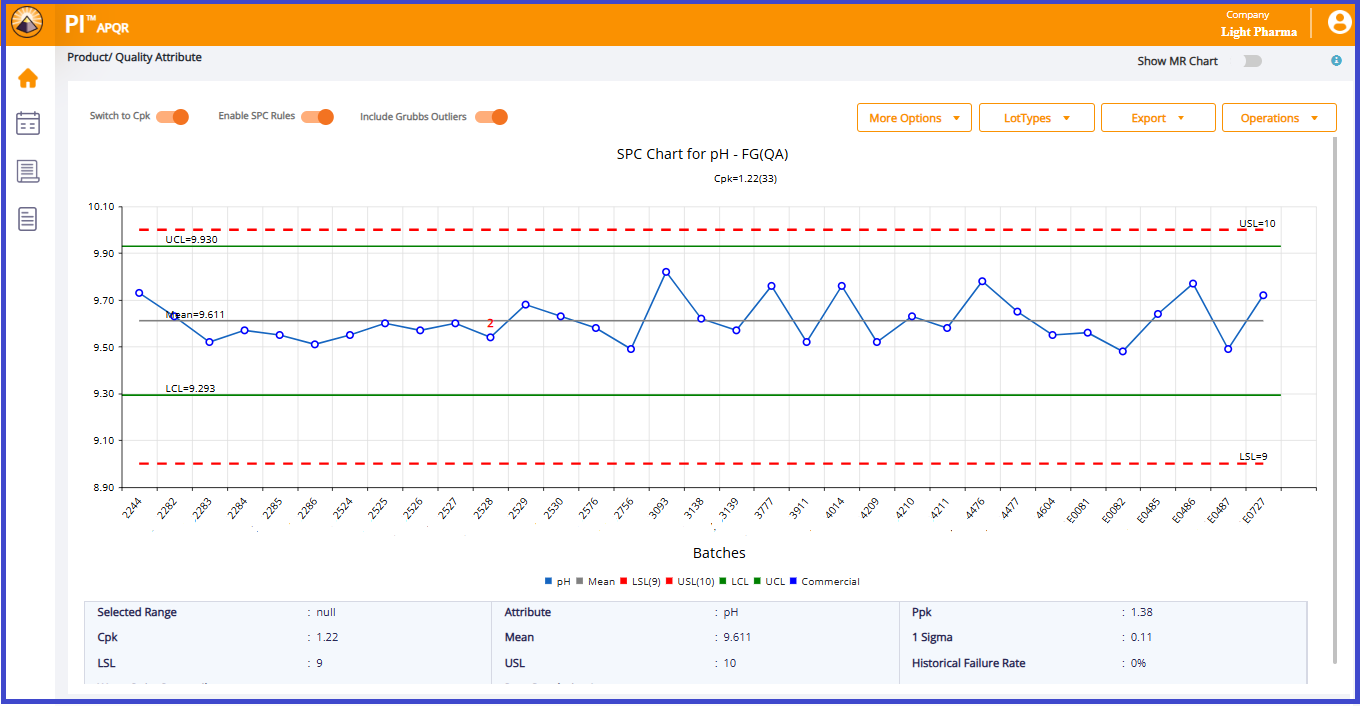
Built-in statistical tools: Cpk / Ppk process capability, SPC control charts with Nelson rules, ANOVA before/after change comparison, and stability shelf-life predictive analysis.
Role Management
Granular role-based privileges to view, edit, review, approve, and export APQR reports. Ensures the right tasks are performed by the right people, with sensitive data fully protected.
Customizable Templates & Reports
Fully customizable APQR templates. Export to Word or PDF. Generate consolidated reports for single or multiple product strengths and multiple market jurisdictions in one cycle.
AI-Augmented Summaries
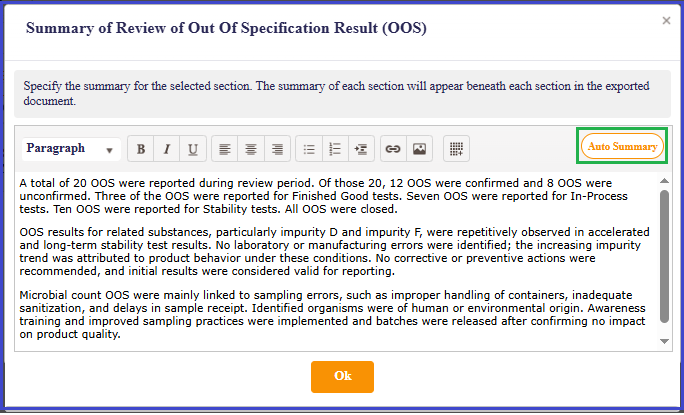
Generative AI drafts section summaries, conclusions, and recommendations from your APQR data. Human reviewers retain full editorial control — AI accelerates the work; quality professionals validate.
Flexible Configuration
User-level configuration for specifications and control charts — no coding required. Admin-level configuration for template customization. Adapt to your products, sites, and geographies.
Security by Design
Built for CGMP, 21 CFR Part 11, EU Annex 11, and global regulatory frameworks. Time-stamped audit trails of every user activity, exportable change histories for inspection, and embedded e-signatures.
Light Pharma APQR In Action
See how Light Pharma APQR streamlines every stage of the APQR lifecycle — from scheduling and data import to statistical analysis and AI-generated summaries.
Works With the Systems You Already Have
No rip-and-replace required. Direct integration with your existing pharma infrastructure.
Ready for Revised Schedule M (India) Compliance
India's Revised Schedule M (MSME compliance deadline December 31, 2025) introduces mandatory Pharmaceutical Quality Systems, Quality Risk Management, CAPA, and data integrity — aligned with WHO GMP (TRS 986) and ICH Q8/Q9/Q10. Light Pharma APQR is built for these requirements out of the box.
Download Schedule M APQR Readiness ChecklistFrequently Asked Questions
What is APQR (Annual Product Quality Review)?
APQR is a regulatory requirement under 21 CFR 211.180(e) (US), EU GMP Chapter 1.10 (EU), and Schedule M (India) for pharmaceutical manufacturers to conduct an annual review of each licensed product. The review evaluates batch data, in-process and finished product test results, deviations, complaints, recalls, change controls, stability data, and regulatory submissions to confirm that processes remain in a state of control and products consistently meet quality standards.
How does Light Pharma APQR automate APQR generation?
Light Pharma APQR integrates directly with LIMS, SAP, TrackWise, EDMS, Lonza Moda, and MBR/BMR systems to auto-populate batch, QMS, and analytical data for the selected review period. Predefined templates structure the output, AI drafts section summaries, and built-in statistical tools (Cpk/Ppk, SPC, ANOVA, stability prediction) eliminate manual Excel analysis. Human reviewers retain full editorial control.
Is Light Pharma APQR 21 CFR Part 11 and EU Annex 11 compliant?
Yes. Light Pharma APQR is built for compliance with CGMP, 21 CFR Part 11, EU Annex 11, and aligned global frameworks. It includes time-stamped audit trails of all user activities, exportable change histories, embedded e-signatures, role-based access control, and validated workflows ready for FDA, EMA, MHRA, CDSCO, and other regulator inspections.
Does Light Pharma APQR support Revised Schedule M (India) requirements?
Yes. Light Pharma APQR is built for the Pharmaceutical Quality System, Quality Risk Management, CAPA, and data integrity requirements of India's Revised Schedule M (notified 2023, MSME deadline 31 December 2025). It also integrates with Light Pharma's broader Schedule M compliance services for gap assessment, remediation, and training.
What systems does Light Pharma APQR integrate with?
Light Pharma APQR integrates with LIMS, SAP, TrackWise, EDMS, Lonza Moda, and MBR/BMR systems. It also supports standardized Excel file imports where no direct integration is required.
How is the AI used in Light Pharma APQR?
Light Pharma APQR uses generative AI to draft section summaries, conclusions, and recommendations from your APQR data. Quality professionals always review, edit, and approve every AI-generated output before it becomes part of the official APQR. AI accelerates drafting; humans retain full editorial control.
How long does deployment take?
Typical deployments take 8–16 weeks depending on the number of products, sites, integration scope, and validation requirements. Our team supports validation, configuration, and user training as part of every deployment.
Ready to Transform Your APQR Process?
See Light Pharma APQR in a 30-minute live demo. We'll walk through your specific products, systems, and compliance requirements.